2021–ongoing
Boogaloo Bias
Facial Recognition by Any Memes Necessary
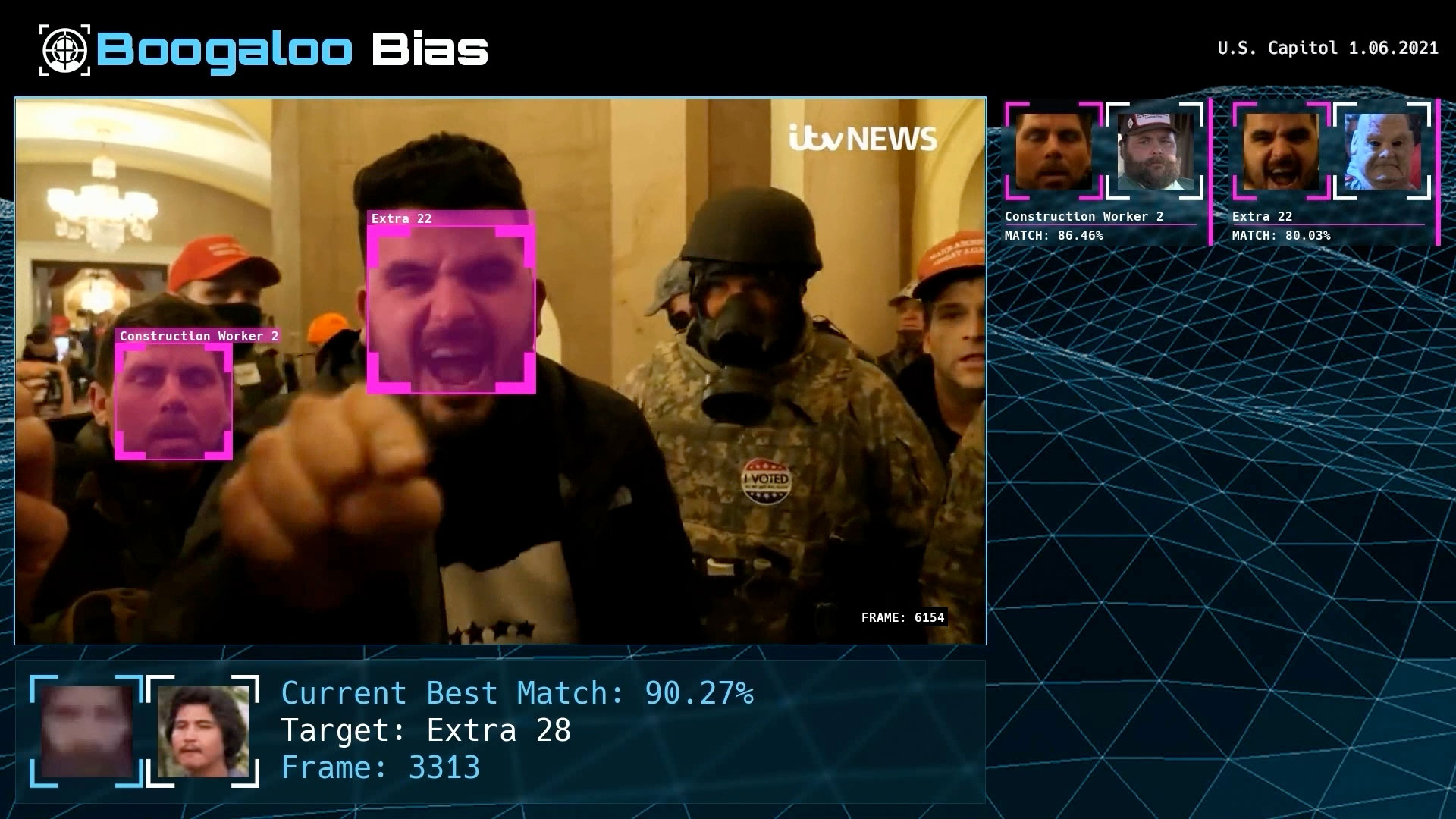
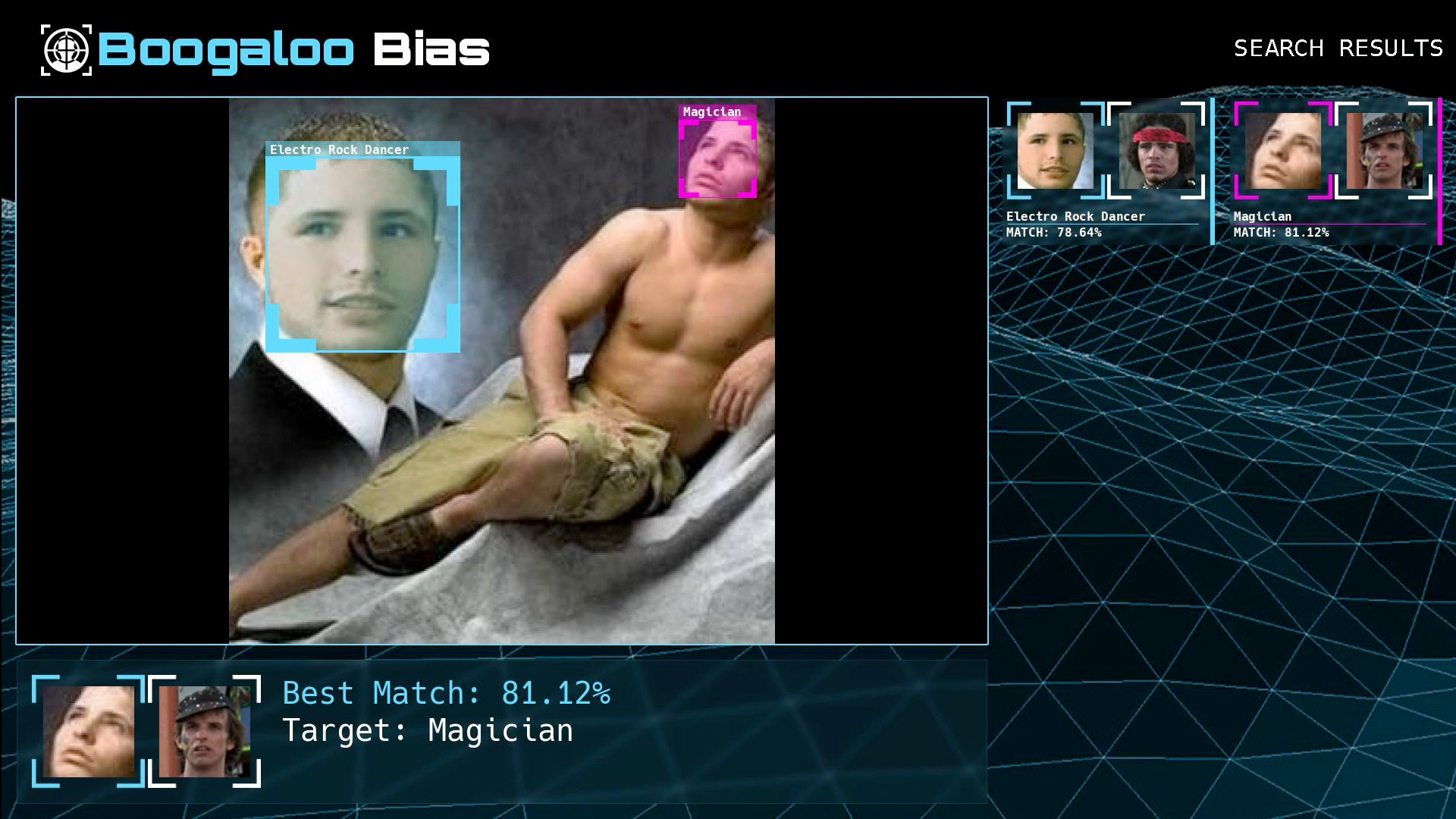
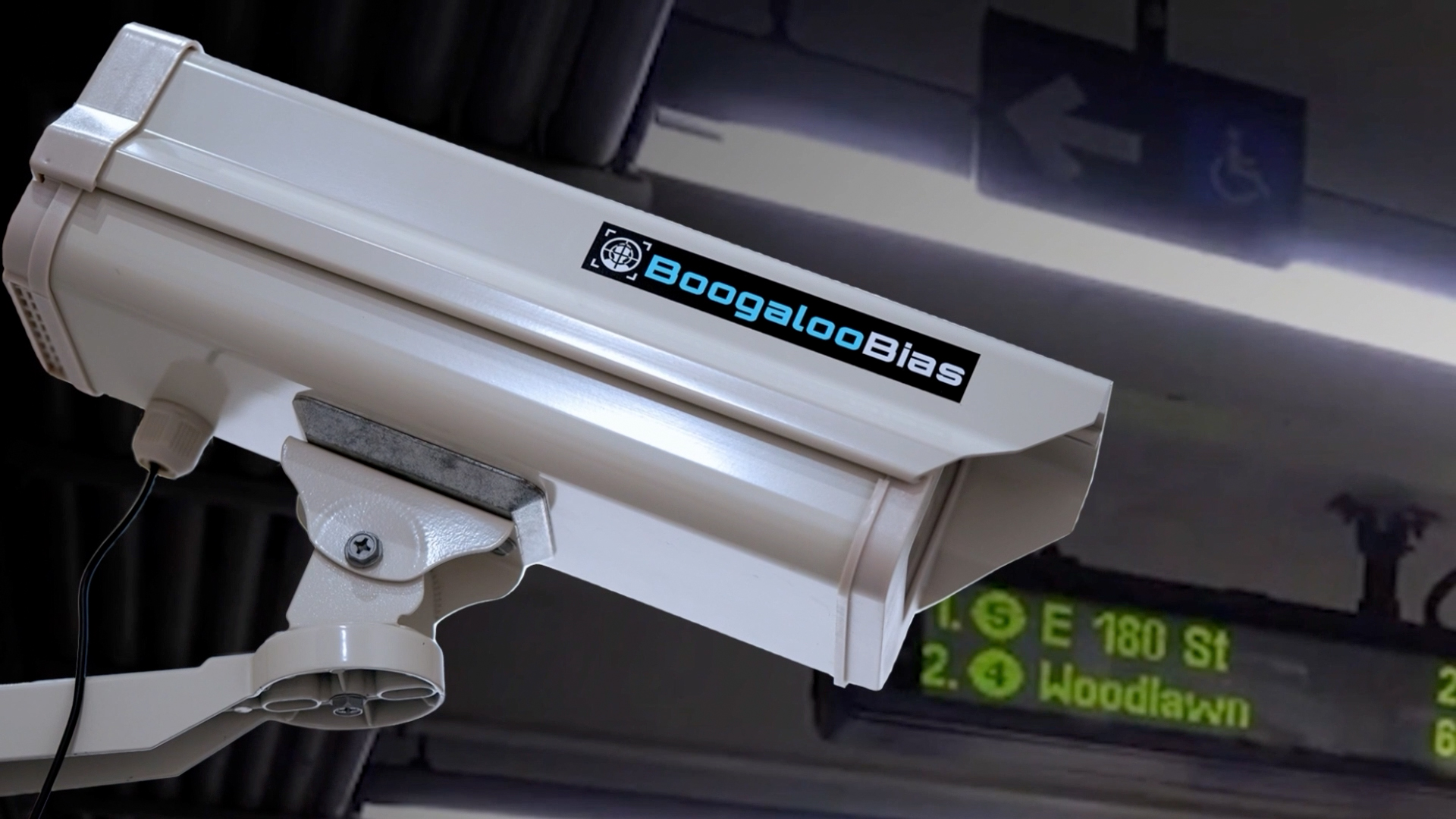
Boogaloo Bias is a facial recognition system trained exclusively on faces from the 1984 film Breakin' 2: Electric Boogaloo, used to search live CCTV feeds, protest footage, and public uploads for members of the Boogaloo Bois — the anti-law-enforcement militia that takes its name from the film and has been active at U.S. protests since January 2020. The project is based on research into some of the known problems with law enforcement agencies’ use of facial recognition technologies, including the practice of ‘brute forcing’ where, in the absence of high-quality images of a suspect, agents have been known to substitute images of celebrities the suspect is reported to resemble. Every match Boogaloo Bias returns is a false positive.
- Collaborators Jennifer Gradecki

Boogaloo Bias raises questions about automated decision making, public accountability, and oversight within a socio-technical system where machines are contributing to a decision-making process.
Georgetown Law’s Center on Privacy and Technology found that no consistent rules govern what images police can submit to facial recognition systems to generate investigative leads and police have been found to have submitted composite images, hand-drawn forensic sketches and photos of celebrities thought to resemble a suspect (Garvie, 2019). These practices likely developed out of a literal reading of anthropomorphic language when the users don’t have technical knowledge of how machine vision systems work. This is compounded by marketing hype that overpromises technology’s actual capabilities. Organizations like the NYPD have surveillance networks composed mostly of older, low-resolution cameras, mounted high to cover the most ground — which produces bad angles for facial recognition. When the footage from these cameras is not usable, operators fall back on older techniques, such as forensic sketches, or photos of celebrity look-alikes–effectively brute-forcing facial recognition.

Interacting with the System
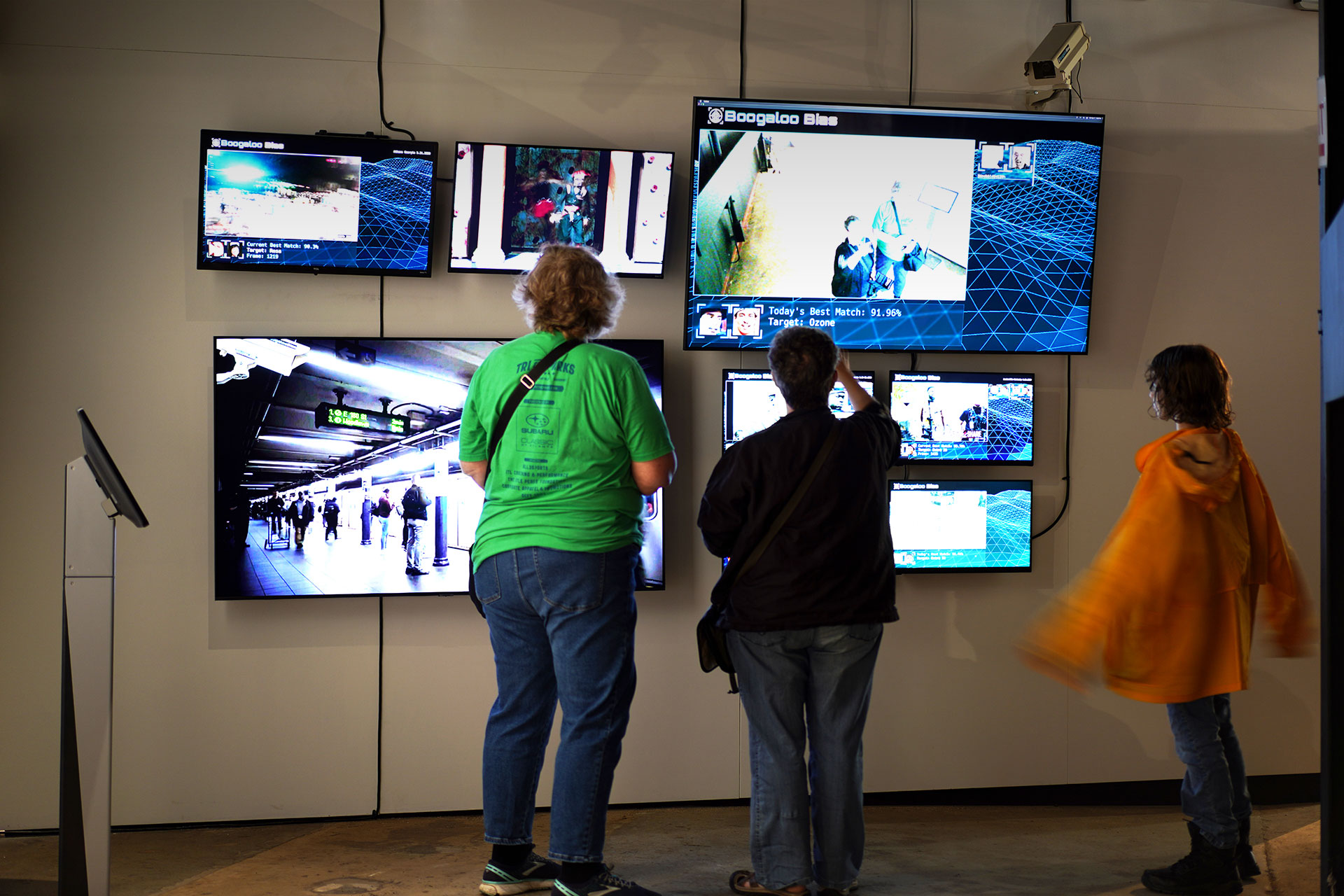
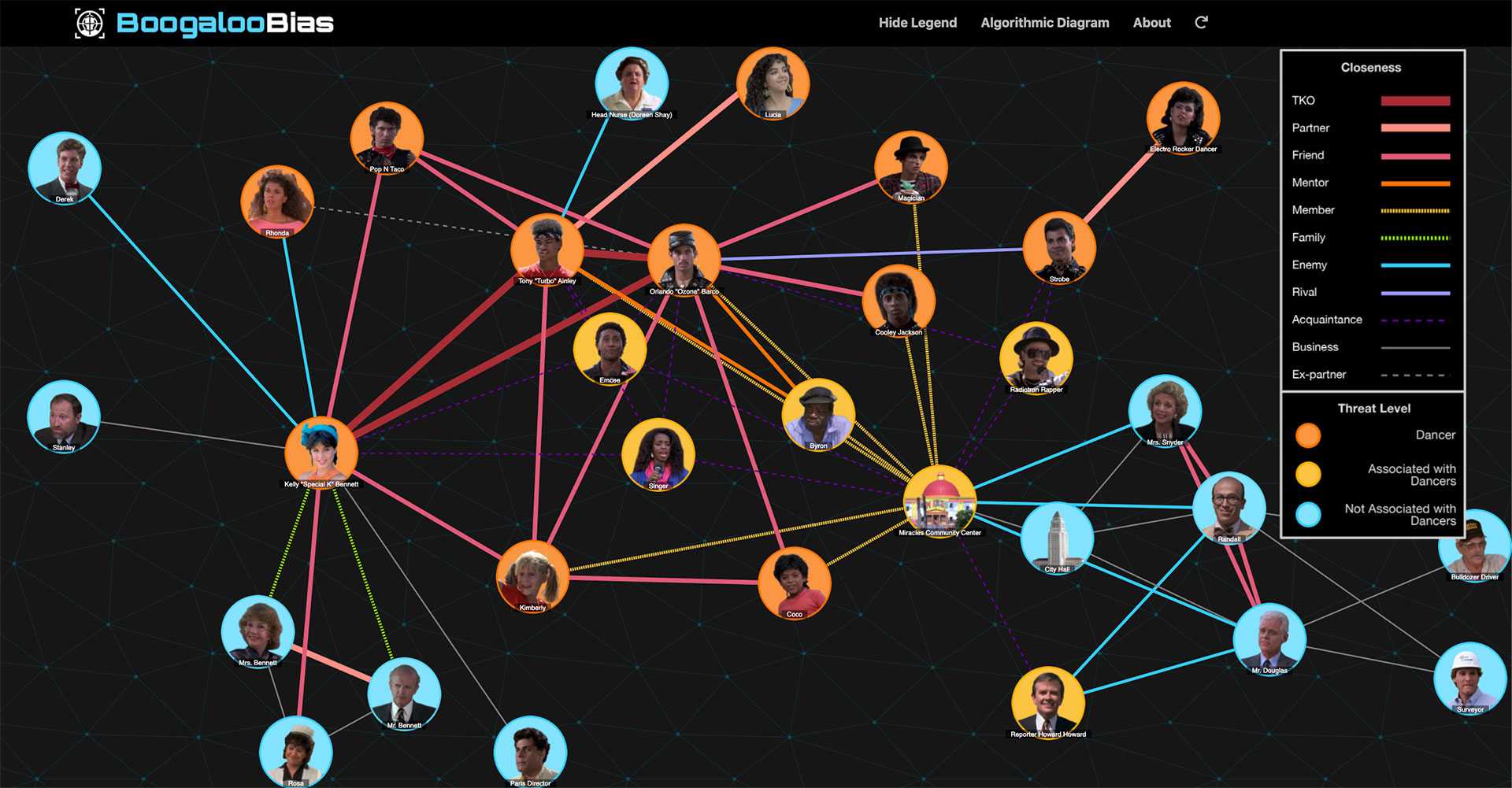
In an installation of the project, viewers can interact with the Boogaloo Bias facial recognition algorithm through one or more live CCTV cameras and see which Breakin’ 2 characters the system finds to be matches. Viewers will see how their matched character can change as they move their head or change facial expressions, revealing how easily this practice can be compromised. The installation also includes interactive social network analysis (SNA) diagrams and videos of protest footage that has been processed by our facial recognition system.

Exhibitions
- Really?: Art and Knowledge in a Time of Crisis, Framer Framed, Amsterdam, NL, curated by Mi You and David Garcia.
- Beta Festival, Dublin, Ireland, November 1-17, 2024
- Tracked and Traced, Science Gallery Detroit, Lansing, MI, September 2021.
- Intractable Pavilion, The Wrong Biennale, virtual: https://exmedialab.com/wrong/, November 2021.
- FutureRetro, Athens Digital Arts Festival, Athens, Greece, June 2022.
- Conference on Computation, Communication, Aesthetics & X (xCoAx), Coimbra, Portugal, July 2022
- AI, AI, AI, PIKSEL Festival 2022, Bergen, Norway
- Justice, Science Gallery Atlanta, Emory University, GA, March – September 2023.
Citations
- Framer Framed Podcast, Digital Doppelgangers: Art and the Failure of Facial Recognition (#19)
- Dejan Grba, Computer Vision in Tactical AI Art, Arts & Communication Journal, 2024
- Dejan Grba, Renegade X: Poetic Contingencies in Computational Art, Proceedings of the 11th Conference on Computation, Communication, Aesthetics & X, 2023
- Stacia Pelletier, Boogaloo Bias by Jennifer Gradecki and Derek Curry, Science Gallery Atlanta, September 12, 2023
- Mrinmayee Bhoot, Probing the (un)certainties of (un)knowing at Framer Framed's Amsterdam exhibition, StirWorld, August 16, 2024
- Paula Rodríguez Sardiñas, Ik ben, dus ik twijfel — 'Really? Art and Knowledge in Time of Crisis' bij Framer Framed, Metropolis M, May 9, 2024
- A Glimpse Into the Burgeoning World of AI Arts and Media, Immerse, March 3, 2022